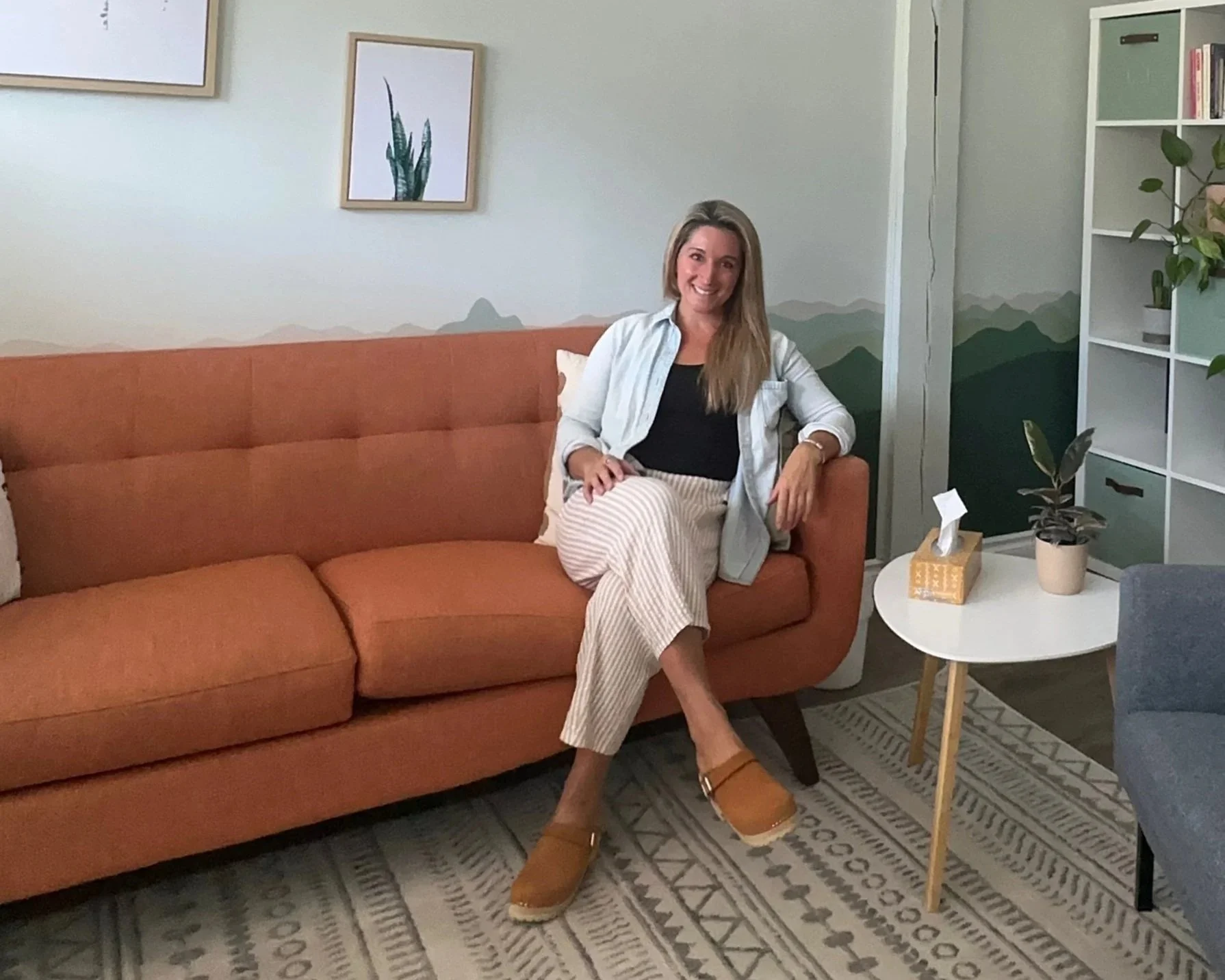
Meet Jenya Draganova, RCC
Registered Clinical Counsellor (BCACC)
Hi, I’m Jenya.
If you’re here, you might already have insight into what’s going on. You’ve done some reflecting. And still, something keeps repeating in your relationships.
You might find yourself overthinking, pulling away, or feeling unsettled when things start to feel close.
Even when you understand it logically, your body reacts before you can think your way through it.
That’s often where we begin.
I’m a Registered Clinical Counsellor (RCC) with the BC Association of Clinical Counsellors. I hold degrees in psychology, education, and counselling psychology, and I specialize in somatic therapy, attachment-based counselling, parts work, and inner child healing.
I work with thoughtful, self-aware adults who feel stuck in patterns that keep repeating, especially in relationships.
You might understand where your anxiety comes from and have already done a lot of reflecting. And still, when something gets activated, your body reacts before you can think your way through it. That is often where we begin.
My approach is somatic and attachment-based. We slow things down and pay attention to what is happening in your nervous system and your relationships in real time. We focus on building safety first so change can feel more steady and lasting. My hope is that our work feels grounded and supportive, and that you leave feeling more secure in yourself and in the relationships that matter to you.
My Approach
I work with people who feel stuck in patterns that don’t seem to change, especially in relationships.
In our work together, we slow things down and pay attention to what’s happening in your body and in your connections with others.
Rather than only talking about your experiences, we begin to notice how they show up in real time, so change feels more natural and lasting.
In our sessions, we pay attention to:
• How your early experiences shape your current relationships
• How anxiety, withdrawal, or overgiving show up when things feel close
• The parts of you that protect, and the parts that long for connection
• How to feel more steady and secure in your relationships
Every session is designed to help you not just understand your patterns, but also feel and practice new ways of relating in your body—so change can last.
My Journey
Before becoming a counsellor, I worked in education for many years, often supporting the emotional and mental health of the young people and communities I was part of. I found myself naturally drawn to the conversations that went a bit deeper. The ones where something underneath the surface was trying to be understood.
Over time, I felt pulled toward more one-on-one work, where there was space to slow things down and really pay attention. That’s what led me here.
My path into this work is also personal. In my twenties, I experienced a significant loss that shifted how I understood relationships, anxiety, and emotional pain.
For a long time, I could make sense of things in my head, but still felt stuck in patterns that didn’t change. Especially in close relationships, my reactions would take over before I had a chance to think them through.
It was through somatic and attachment-based work that things started to shift in a different way. Not just understanding, but actually feeling more steady. Having more choice in how I responded. Being able to stay present in moments that used to feel overwhelming.
That experience shapes how I show up in this work now. With care, with presence, and with a lot of respect for how hard it can be to change patterns that feel so automatic.
Education & Training
-
Master of Counselling Psychology — Athabasca University
Bachelor of Education — University of British Columbia
Bachelor of Arts in Psychology — University of British Columbia
-
Externship in Emotionally Focused Therapy for Couples
Introduction to Hakomi Therapy Training
ASIST (Applied Suicide Intervention Skills Training)
Positive Behaviour Supports and Functional Behaviour Assessment
The Neurological Consequences of Trauma: A Trauma-Informed Approach
Well Ahead: Creating Community in the Classroom Through Circle
Heart Matters: What to Do with Children’s Feelings (PITA)
A New Approach to Understanding Anxiety (PITA)
Teaching Students With Complex Learning Needs, Including FASD (PITA)
Anti-Homophobia and Diversity Workshop